AI Integration for E-Commerce
Industry Solution

AI Integration for E-Commerce

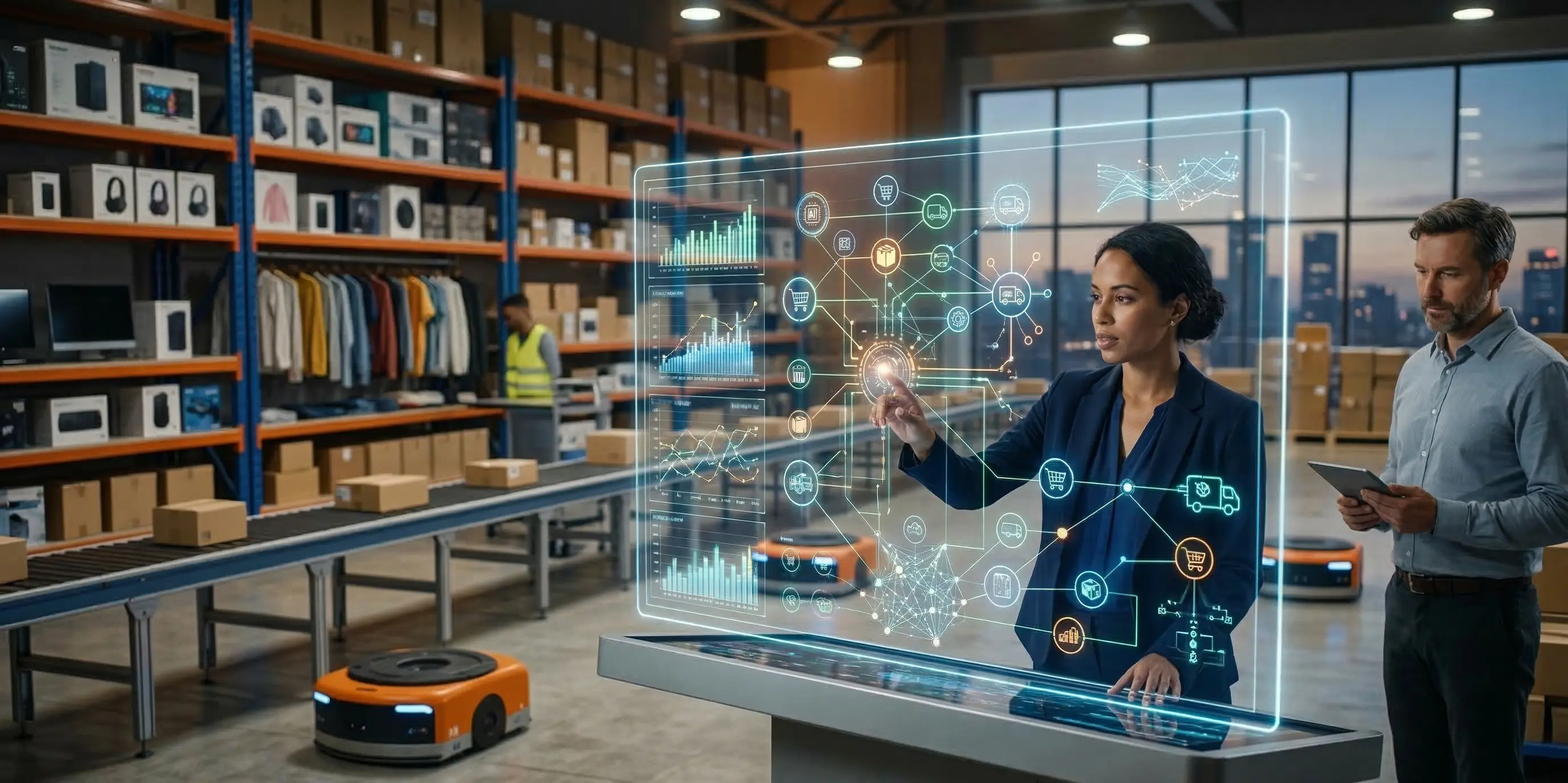
Scale your E-Commerce operations with AI-driven customer support, personalized marketing, and automated inventory forecasting.

Measurable Results

Measurable Business Impact

65%

Support Automation

Of routine customer inquiries resolved without human intervention.

10x

Content Production

Increase in speed of generating SEO-optimized product listings.

+18%

Average Order Value

Increase in AOV through AI-driven personalization.

Common Challenges

E-Commerce businesses face the dual challenge of scaling customer acquisition while maintaining high-quality support and efficient inventory management.

  • Overwhelming customer support ticket volumes during peak seasons
  • Time-consuming creation of product descriptions and marketing copy
  • Inefficient inventory forecasting leading to stockouts or overstock
  • Generic shopping experiences that fail to convert

How AI Transforms E-Commerce

AI integrations can assist by:

  • Advanced conversational AI for 24/7 tier-1 customer support
  • Generative AI for bulk product descriptions and ad copy
  • Predictive inventory modeling based on historical and trend data
  • Hyper-personalized product recommendation engines
  • Automated review analysis for product sentiment insights

Performance Data

Support & Marketing Time

Average hours spent per week on manual E-Commerce operations.

Ticket Resolution

Before AI

40 hours

After AI

10 hours

Reduction

30 hours

Content Creation

Before AI

25 hours

After AI

5 hours

Reduction

20 hours

Data Analysis

Before AI

15 hours

After AI

2 hours

Reduction

13 hours

Inventory Checks

Before AI

10 hours

After AI

1 hours

Reduction

9 hours

Featured Case Study

Scaling Support During Hyper-Growth

Fast-Growing E-Commerce Brand

The Challenge

Following a viral social media campaign, the brand's support team was drowning in a 4-week backlog of tickets regarding order status, returns, and sizing, severely damaging their reputation.

The Solution

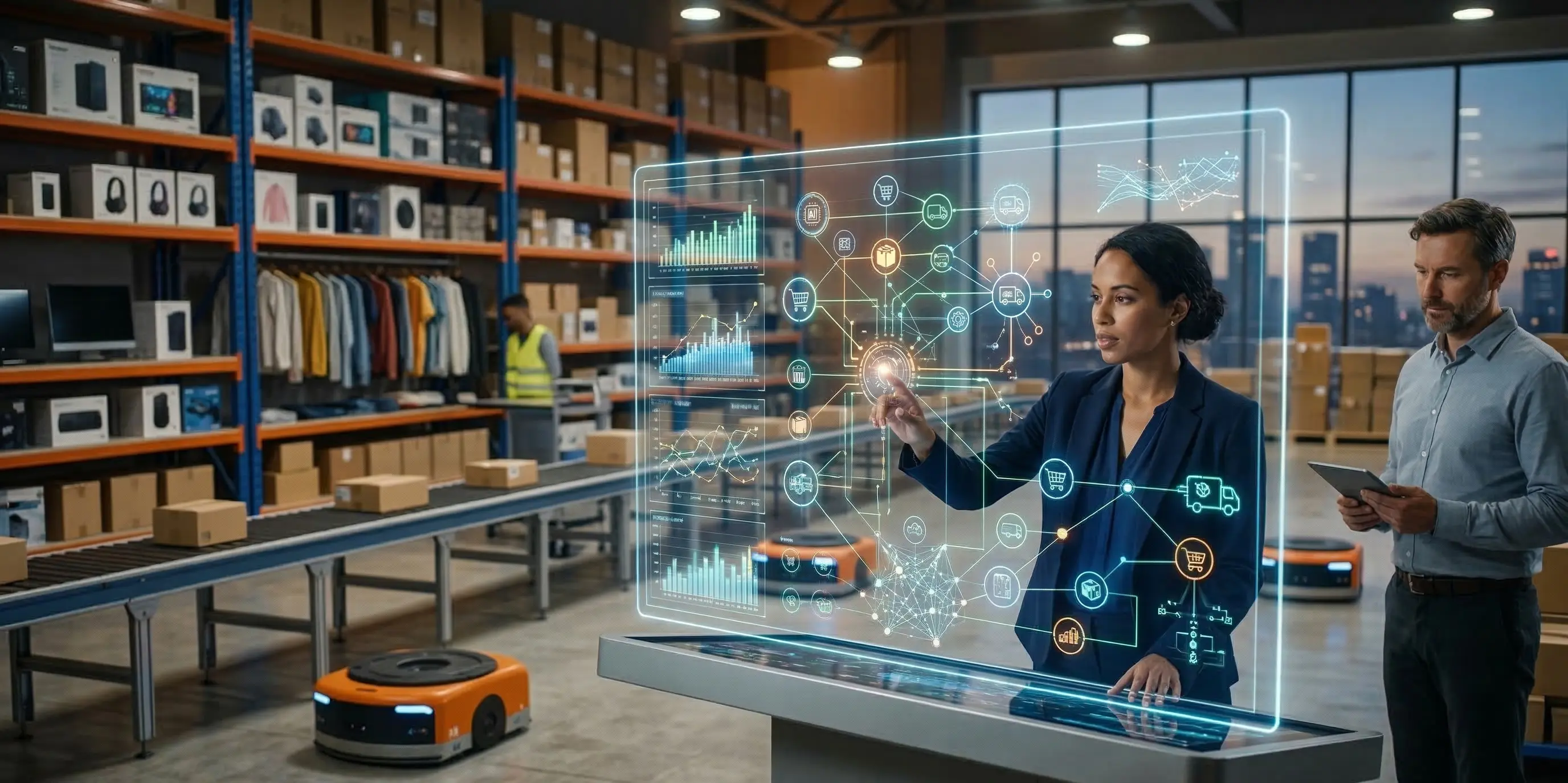
Nexithon rapidly deployed an AI support agent integrated directly with Shopify and Zendesk. The agent instantly handled WISMO (Where Is My Order), processed automated returns, and provided sizing recommendations based on product data.
Key Results

  • Cleared a 10,000+ ticket backlog in 48 hours
  • Maintained a 92% CSAT score on AI-handled interactions
  • Reduced support cost per ticket by 78%
  • Allowed human agents to focus exclusively on high-value VIP issues
Case Study

Choose Your Route

E-commerce teams can be lean, or they can be operationally complex.

Use the buyer-type fork below to choose the path that matches your operating environment instead of forcing both audiences into one CTA.

SMB Route

Lean commerce teams

Choose this route if your goal is to move faster on support, content, and inventory-adjacent workflows without a broader transformation programme.

Typical fit

Founder-led or growth-stage brands that want practical automation and clearer operational leverage across a small team.

  • Automate support and content-heavy tasks that slow down a lean operations team
  • Keep rollout practical, fast, and tied to visible weekly improvements
  • Move into an SMB programme structure built for smaller teams
Explore SMB Programmes
Enterprise Route

Multi-channel retail operations

Choose this route if your environment includes larger support volumes, system integrations, governance needs, or multiple functions that must change together.

Typical fit

Established ecommerce and retail operations with cross-functional marketing, service, inventory, and reporting dependencies.

  • Treat AI as an operational transformation initiative instead of a point-solution rollout
  • Scope integration, governance, and workflow redesign through a Discovery Engagement
  • Start with a peer-level briefing before implementation planning
Book an AI Opportunity Briefing

Common Questions

FAQs about E-Commerce

These answers are designed to make it easier for teams evaluating AI integration to understand fit, starting scope, and implementation expectations.

What does AI integration for E-Commerce usually include?

It usually starts with the workflows that create the most repeatable drag for e-commerce teams, then connects automation, data handling, reporting, and team handoffs around the systems already in use.

Which e-commerce workflows are usually the best first candidates for AI?

The strongest starting points are typically high-volume, rules-based tasks such as document handling, follow-up, intake, reporting, coordination, and repetitive review work where the time savings are visible quickly.

Can Nexithon work with the software e-commerce teams already use?

Yes. Nexithon’s approach is built around integration with existing operational systems wherever practical, so the goal is usually to improve current workflows rather than force a disruptive rip-and-replace project.

How do e-commerce teams choose between the SMB and enterprise routes?

Teams usually choose the SMB route when they need practical workflow wins quickly, and the enterprise route when multiple departments, integrations, approvals, or change-management demands shape the project.